

Article: Soalheiro Harvest 2026: Each place, its own moment
Soalheiro Harvest 2026: Each place, its own moment
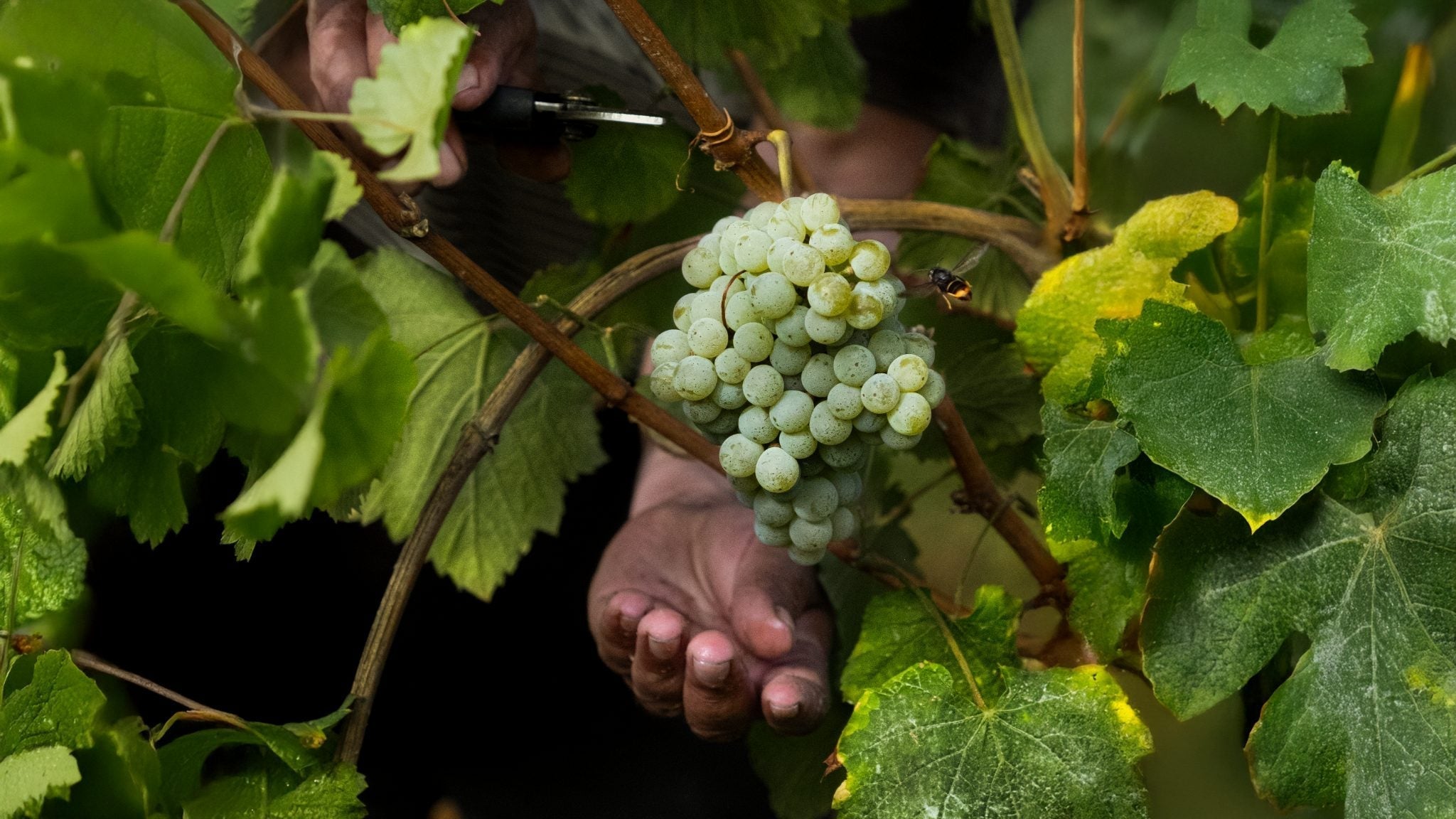
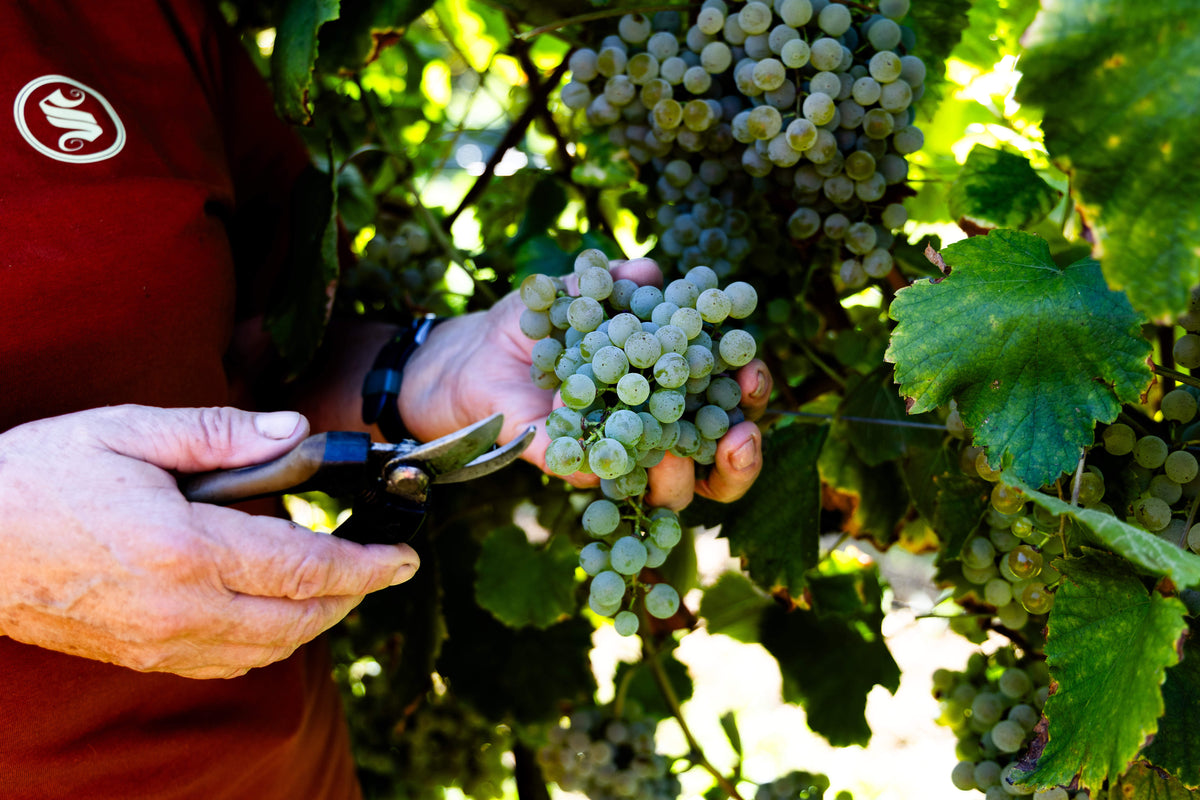
In 2026, Soalheiro carried out the earliest harvest in its history. Picking began on 11 August and moved from the valley to the mountain, following the rhythm of each place and bringing healthy grapes, good ripeness and good yields to the winery.
The date says a great deal about 2026, but it doesn't tell the whole story. It was a hot year of rapid ripening, in which we had to start early in the valley and then wait for the high-altitude plots and the old vines.
In a territory like Monção e Melgaço, just a few kilometres are enough to change altitude, exposure, soil and temperature, and with them the pace of ripening. In a year as fast-moving as 2026, those differences became even more pronounced.
That is why we didn't look for a single harvest date. We looked for the right moment for each place.
A hot year, with more water, that supported the progress of ripening.

2026 was hot and early, but different from 2025.
Where a lack of rainfall had defined the previous year's cycle, in 2026 spring brought greater water availability, along with periods of unsettled weather. April and May saw episodes of heavy rain and thunderstorms, with localised hail, and June brought very high temperatures.
This combination had two distinct effects in the vineyard.
First, the spring humidity created favourable conditions for downy mildew, which appeared early and called for close monitoring and well-timed intervention. Pressure remained under control.
Then, as temperatures rose, the focus shifted. The June heat peaks increased the risk of sunburn and heat stress, especially in the most exposed plots.
The hail recorded in the region was localised and caused no significant losses in our plots. Nor did the hottest spells lead to any meaningful drop in yield.
We therefore reached the harvest with healthy grapes, good ripeness and good yields. It sounds simple when written after the harvest, but bringing these three factors together in a meteorologically demanding year is one of the outcomes we value most.
"We finished the harvest with the grapes in excellent phytosanitary condition, in terms of both quality and quantity. A very wet winter and a spring with some rainfall, followed by a dry, hot summer, brought the growing cycle forward, supported balanced ripening and helped keep the vines healthy right up to picking."
Miguel Alves, Head of Viticulture
Monção and Melgaço: the reading is always local

Broad climate patterns help us understand a year, but on their own they don't explain what happens in a vineyard.
2026 once again showed the importance of the particular position of Monção e Melgaço, the northernmost area of the Vinho Verde region, with a microclimate very much its own.
While spring across mainland Portugal was generally warm and dry, Monção e Melgaço had moments that clearly departed from that pattern. In April, when the national average temperature anomaly exceeded +2°C, Melgaço recorded a negative anomaly. In May, the lowest minimum temperature in the country was recorded in this northern region.
This alternation helps explain our territory: days capable of accelerating ripening, cool nights, and significant differences between the valley floor and the mountain.
But 2026 also showed that none of these factors can be analysed in isolation. The water stored over the preceding months meant the vines went into the hottest period with different reserves from previous vintages. The heat sped up the cycle, but each plant's response was shaped by where it stood.
That is precisely why, at Soalheiro, the reading is always local.
The challenge wasn't picking early. It was knowing when to pick.

The progress of ripening was the clearest sign of what made 2026 unique.
Over the weeks leading up to the harvest, we regularly monitored our growers' plots. For an equivalent level of ripeness, the checks showed the season running about a week ahead of 2025 and roughly two weeks ahead of 2024.
But more important than arriving early was the speed at which the grapes evolved.
In some plots, just a few days were enough to change the balance of the grapes significantly. Potential alcohol rose quickly, but in a year like this, following sugar alone would have been far too simple a reading.
The risk of waiting too long was losing acidity and letting pH climb too high. Yet bringing picking forward across the board would also have been a mistake: harvesting purely for fear of losing freshness could have meant bringing in grapes that had not yet reached full aromatic ripeness. This was probably the single most important technical point of the 2026 harvest.
On an estate where we monitor around 700 plots, catalogued by parameters such as training system, age, altitude, soil and aspect, bringing the harvest forward doesn't simply mean moving a date. It means re-evaluating hundreds of decisions.
So the decision to pick was made by cross-referencing potential alcohol, total acidity, pH, malic acid, berry weight, yeast assimilable nitrogen and grape tasting, always drawing on the accumulated knowledge of each plot.
And in 2026, of all these indicators, pH became particularly critical.
Malic acid is especially sensitive to high temperatures, and its breakdown through respiration increases with heat, above all when nights stay warm. Preserving acidity without compromising ripeness therefore became an exercise in precision.
Starting early didn't mean picking everything early. It meant picking first where the vines were ready, and waiting where the place still gave us time.
From valley to mountain

The harvest began in the lowest-lying areas of Monção e Melgaço, where ripening progressed first. From there, we gradually moved up in altitude.
The first grapes to arrive were those destined for our sparkling wine bases, picked in pursuit of high natural acidity, restrained potential alcohol and precision. These are wines conceived in the vineyard for the long ageing that lies ahead of them, so the timing of the pick is decisive.
We also brought forward the grapes for the wines in which we seek a particularly direct expression of the territory and of the variety's natural freshness, such as Loureiro, Pinot Noir and Sauvignon Blanc.
As we moved into the higher areas, the pace changed. Cooler nights and wider temperature swings allowed slower ripening and gave us room to wait.
The old vines came later, with tauter, more linear and deeper musts and a particularly interesting acid structure.
By mid-September, the native red varieties came in, with very complete phenolic ripeness, good fruit expression, colour and ripe tannins, with no need to chase over-ripeness.
The sequence of the harvest showed very clearly one of the greatest riches of Monção e Melgaço: within a relatively small territory, altitude, exposure, soil and temperature can create very different rhythms and expressions. The 2026 harvest thus ended up physically tracing the shape of our territory: it began in the valley and finished on the mountain.
Uma vindima feita com pessoas


A harvest that starts in early August also means bringing forward everything that goes unseen when a bottle is opened.
Analyses, teams, grape reception, tanks, presses and logistics all had to keep pace with a calendar that had moved forward by several weeks.
But at Soalheiro there is another fundamental dimension. Our harvest isn't made from our own vineyards alone. It is made with hundreds of small family plots across Monção e Melgaço, tended throughout the year by growers who know every patch of land and are part of Soalheiro's story.
In a year when ripening moved so fast, that closeness became even more important.
Plots had to be monitored almost daily, analyses repeated, grapes tasted, conversations held with growers, and the picking order continually adjusted. Two neighbouring vineyards could be several days apart, and between the valley and the mountain, even more.
Technology allows us to measure. Experience allows us to interpret. But it is people who know the vineyard and who make the decisions.
2026 begins to reveal itself in the winery

It is still early to fully define a vintage that is only taking its first steps, but the musts and young wines already hint at an identity.
2026 surprises with its fruit and, above all, with the freshness we managed to preserve in such an early year.
In the Alvarinhos we find a more pronounced and enveloping stone-fruit character, alongside a very well-defined citrus component. Good acidity, balanced pH and generous levels of malic acid give us confidence in the wines' capacity to evolve.
And the differences we observed in the vineyard are now beginning to show in the glass.
In the lower-lying areas, we find Alvarinhos with more open fruit, volume and structure. At altitude, the profile becomes tauter and more linear, with greater verticality and persistence. The old vines bring a depth and structure that point towards wines for ageing.
The sparkling bases retain the acidity and precision we sought from the vineyard, and the reds show fruit, colour and ripe tannins.
In the winery, our task now is to preserve these differences, not erase them.
Continuing to discover Alvarinho

After more than five decades working with Alvarinho, we are still discovering new ways to interpret it.
2026 once again gave us room to experiment and to take the variety beyond the expressions we work with every year. These are small productions, experiments exploring other forms of concentration, texture, ripeness and freshness, and seeing how Alvarinho responds when we change some of the conditions we usually take for granted.
We don't experiment simply to be different.
Innovation at Soalheiro comes from curiosity about the variety and the place, and from the desire to keep learning from both. Knowing Alvarinho deeply doesn't mean believing we already know everything about it. Quite the opposite: the more we work with it, the more questions arise.
Each place, its own moment

2026 will be remembered as the earliest harvest in our history, but we don't want it to be remembered only for the date it began.
The most fascinating thing about this year was seeing how the same hot, fast-moving cycle found different answers within Monção e Melgaço.
And between one and another, hundreds of small plots kept showing us that there is no single answer to a hot year. Each place showed us its moment, and it was up to us to recognise it.
It is still too early to know everything these wines will have to say. Some will quickly show the fruit of 2026; others will need months or years to reveal what we are only now beginning to sense.
That is exactly what we look for when we make wine: not that every plot or every vintage behaves the same way, but that each one keeps what makes it different.
Because before the winery, before the bottle and before the wine, there is the place.
Chosen by the place.